
The Rise of Fractional RevOps: Why B2B Companies Are Rethinking How They Scale Revenue
Article Highlights
Key Takeaways
- Fractional RevOps gives companies access to experienced Revenue Operations professionals (from analysts to VP-level leaders) on a part-time or project basis, without the cost or timeline of a full-time hire.
- 79% of organizations entered 2025 with a formal RevOps function, and companies with one report 36% higher revenue growth than those without.
- A typical fractional engagement runs $5,000 to $10,000 per month, compared to $250,000+ annually for a full-time VP of RevOps.
- Fractional RevOps works best for B2B companies that need operational infrastructure but aren’t ready for a full-time hire.
By 2026, 75% of the fastest-growing companies are projected to have a formal RevOps model in place. You’re reading this, so you probably already have a sense of why.
Today, a lot of companies are dealing with what you’d call a good problem. Growth is happening. Deals are moving, the team is expanding, and the pipeline is building. But ops hasn’t caught up yet. Marketing and sales are running on separate tracks. Tools are being underutilized. The forecast is more of an educated guess than something you’d actually stake your quarter on.
You know Revenue Operations is the answer. It’s just that the traditional path to getting there (a full-time VP hire at $250K+ all-in, with a six-month search) doesn’t always make sense for where you are right now.
That’s where fractional RevOps comes in. Same expertise, more practical entry point.
What Is Fractional RevOps?
Fractional RevOps is Revenue Operations expertise delivered on a part-time or project-based basis. Rather than hiring a full-time employee, companies bring in an experienced RevOps professional (whether that’s an analyst, manager, director, or VP-level strategist) for a defined number of hours per month, typically on a retainer.
The role itself can range from analyst to VP-level, depending entirely on what the company needs and when. A business that needs someone to clean up its CRM and build pipeline reports calls for a different engagement than one that needs a strategic leader to rebuild its entire GTM operating model. Fractional RevOps scales to the problem.
What makes fractional RevOps professionals particularly effective is that they come in specialized. They already know the tools, have seen the problems before, and arrive with solutions. There’s no onboarding period spent figuring out what’s broken. They diagnose fast and move faster.
Why Fractional RevOps Is Having a Moment
RevOps as a discipline is no longer optional for a lot of growing B2B companies. According to a 2025 State of RevOps, 79% of organizations entered 2025 with a formal RevOps function, and companies with one report 36% higher revenue growth than those without.
The problem is that building RevOps the traditional way is expensive, slow, and risky.
Recruiting a VP of RevOps takes three to six months on average. Total compensation for a senior hire often exceeds $250,000 annually once you factor in salary, benefits, equity, and overhead. And if the hire isn’t the right fit for your current stage, the cost of that mistake goes even higher.
Fractional RevOps addresses all three of those problems.
The Economics Make Sense
A typical fractional RevOps engagement runs $5,000 to $10,000 per month for 20 to 45 hours of embedded work. That translates to roughly $60,000 to $120,000 annually, representing a 50-70% cost reduction compared to a full-time hire when you factor in total compensation and overhead. RevOps Inflection breaks down the full cost comparison here.
For a company at $5M ARR trying to build operational foundations before its next growth push, that difference is significant.
Speed to Impact
Fractional RevOps professionals bypass the extended recruitment process entirely. They show up with proven playbooks, cross-industry pattern recognition, and the ability to diagnose problems and start building immediately. There’s no three-month onboarding curve.
Cross-Industry Expertise
Because fractional practitioners work across multiple companies, they bring perspective that a single in-house hire rarely accumulates. They’ve seen what works at 10 different companies instead of one. They know which processes break at $10M ARR and which shortcuts create technical debt later.
Who Should Consider Fractional RevOps?
Fractional RevOps works best at specific inflection points in a company’s growth.
You’re a strong candidate if:
- You’ve recently closed a funding round and need operational infrastructure quickly
- Your sales, marketing, and CS teams are misaligned: handoffs are broken, data is siloed, and nobody agrees on pipeline numbers
- You know you need RevOps but don’t yet have sustained full-time workload to justify the hire
- You’ve tried to hire a RevOps professional and couldn’t find the right fit within your budget or timeline
You might be better served by a full-time hire if:
- You’re at $50M+ ARR and RevOps touches every part of your business daily
- You need someone deeply embedded in your culture and operating cadence over the long term
- Your RevOps function already exists and needs consistent, ongoing management rather than architecture and build-out
The distinction matters. Fractional RevOps is ideal for building foundations and driving strategic change. Full-time RevOps is better for running a mature function at scale.
What it Actually Looks Like in Practice
Here’s a realistic picture of what a six-month engagement looks like for a $10M ARR B2B SaaS company:
Month 1: Audit of the current revenue tech stack, data quality assessment, identification of top operational bottlenecks across the funnel. Stakeholder interviews with heads of sales, marketing, and CS.
Months 2-3: Design and implementation of a unified pipeline stage framework. CRM cleanup and data governance policies. Establishment of a weekly pipeline review cadence.
Months 4-6: Build-out of a forecasting model leadership can actually trust. Integration of sales engagement and marketing automation tools. First iteration of a RevOps KPI dashboard for the executive team.
Months 7-9 (Wrap-Up): Knowledge transfer, documentation handoff, and final optimization. The fractional engagement formally closes once the team is fully equipped to own and run the systems independently.
That’s the whole point. A good fractional RevOps engagement ends on purpose. The systems are built, the team knows how to run them, and everything is owned internally. The exit isn’t a loss, it’s the goal.
The RevOps Tech Stack: What Fractional Leaders Are Building With
A major part of the fractional RevOps value proposition is knowing which tools to use and when to use them. Here’s what the modern RevOps stack looks like in 2026:
| Category | Tools | What It Does |
|---|---|---|
| CRM Foundation | Salesforce, HubSpot, Microsoft Dynamics | System of record for contacts, accounts, opportunities, and pipeline data |
| Revenue Intelligence | Clari, Gong | AI-powered pipeline forecasting, deal inspection, and conversation intelligence |
| Data Automation and Enrichment | Openprise, Clearbit, Clay | Enriches, cleans, and routes data across the stack without manual intervention |
| Workflow Automation | Zapier, Make, n8n | Connects tools and automates multi-step workflows across the revenue stack; n8n is especially favored for complex, self-hosted automations |
| Sales Engagement | Outreach, LeadAngel | Manages sequencing, lead routing, and sales rep activity at scale |
| Analytics and Visualization | Tableau, Power BI, Google Looker Studio | Turns CRM and pipeline data into dashboards leadership actually uses |
| AI Assistance | Claude | Used by RevOps professionals for data analysis, documentation drafting, workflow logic, and increasingly, AI agent orchestration across GTM functions |
In 2026, the most capable fractional RevOps practitioners are bringing AI implementation experience alongside traditional process design skills. According to Skaled, the industry is shifting from static dashboards to conversational analytics, adaptive forecasting, and AI agents that autonomously execute multi-step revenue workflows. The best RevOps stacks don’t just display data. They act on it.
The Challenges Fractional RevOps Is Designed to Solve
Most companies considering fractional RevOps are dealing with some version of the same problems.
Broken data. Customer information is scattered across CRMs, spreadsheets, and disconnected tools. Nobody trusts the numbers, which means nobody can act on them.
Misaligned teams. Sales, marketing, and customer success each have their own definitions of what a qualified lead looks like, what a stage means, and what the forecast is. The result is handoff gaps and lost revenue.
No process infrastructure. The company has outgrown its startup-era approach to pipeline management, but no one has built the systems to replace it. Forecasts are gut-feel. Stage definitions are inconsistent. Leadership is flying blind.
Expertise gaps. The business knows it needs RevOps but doesn’t have the internal knowledge to build it correctly, or to evaluate whether what they have is working.
Fractional RevOps professionals are specifically equipped to diagnose these problems quickly and implement solutions that stick.
Fractional RevOps and the Future of B2B Revenue Growth
The numbers suggest fractional models aren’t a temporary trend. Analysts project that by 2026, 75% of the fastest-growing B2B companies will have a formal RevOps model in place, up from under 30% just a few years ago.
The fractional economy is broader than RevOps. Fractional CMOs, CFOs, and CROs have become standard fixtures in the startup and mid-market ecosystem. RevOps is simply the latest function to follow suit, driven by both the growing complexity of modern revenue stacks and the recognition that operational infrastructure is a genuine competitive advantage.
How to Evaluate a Fractional RevOps Partner
Not all fractional RevOps engagements are equal. Before you commit, run through this checklist:
| What to Look For | Why It Matters |
|---|---|
| They have relevant stage experience. | Have they worked with companies at your ARR stage, with your GTM model, and in your industry? Pattern recognition is only valuable if the patterns actually match. |
| They already know your tools. | Do they have hands-on experience with your CRM and core stack? Someone learning your systems from scratch costs you time and money. |
| They have a clear plan for embedding. | Can they walk you through their first 30, 60, and 90-day priorities? Vague answers here are a red flag. |
| They prioritize knowledge transfer. | The best fractional practitioners document everything and train your team as they go. You should own everything they build. |
| They can speak to specific outcomes. | Not “I improved pipeline visibility” but “I reduced average sales cycle by 22% at a $12M ARR SaaS company by redesigning stage definitions and implementing a weekly deal review cadence.” Ask for that level of specificity. |
| They have a defined offboarding plan. | A strong fractional RevOps engagement has a clear end state. If they can’t describe what success looks like at exit, that’s a problem. |
Is Fractional RevOps Right for You?
If your revenue operations are holding back your growth, you have two options: wait until you can afford the full-time hire, or bring in experienced help now to build the foundation while your business keeps moving.
For many B2B companies, the math isn’t close. Fractional RevOps delivers real operational expertise at a fraction of the cost, in a fraction of the time, with a fraction of the risk.
The companies scaling fastest in 2026 aren’t waiting for perfect conditions. They’re building operational leverage now.
Frequently Asked Questions
What does a fractional RevOps professional actually do day to day?
It depends on the engagement scope and seniority level. A fractional RevOps analyst might spend their time cleaning CRM data, building dashboards, and running attribution reports. A fractional RevOps director or VP focuses more on designing process frameworks, facilitating GTM alignment meetings, defining forecasting cadences, and making technology decisions. Most engagements involve a mix of strategic planning and hands-on implementation.
How is fractional RevOps different from hiring a RevOps consultant?
Traditional consultants typically assess, recommend, and exit. Fractional RevOps practitioners embed with your team, work inside your systems, and are accountable for outcomes, not just deliverables. The engagement is ongoing rather than project-based, and the focus is on building infrastructure that your team inherits and owns.
What size company benefits most from fractional RevOps?
Companies between $3M and $30M ARR tend to see the most immediate impact. They’ve grown past the point where informal processes work but aren’t large enough to justify a full RevOps team. That said, larger companies also use fractional RevOps for specific projects: system migrations, GTM redesigns, or pre-acquisition operational cleanup.
Can fractional RevOps work alongside an existing in-house team?
Yes, and this is actually one of the more common configurations. A company might have a RevOps analyst or coordinator in-house and bring in a fractional leader to provide strategic direction, run executive-level meetings, and make architecture decisions that the in-house team then executes. The fractional practitioner functions as a force multiplier, not a replacement.
Looking to understand whether fractional RevOps makes sense for your stage of growth? Start by auditing where your biggest revenue operations gaps are and how much they’re costing you in stalled pipeline and missed forecasts.
Stay up to date on RevOps trends
Subscribe to receive the latest news and insights directly to your inbox.
Share on:


Related Articles


AI Marketing Operations
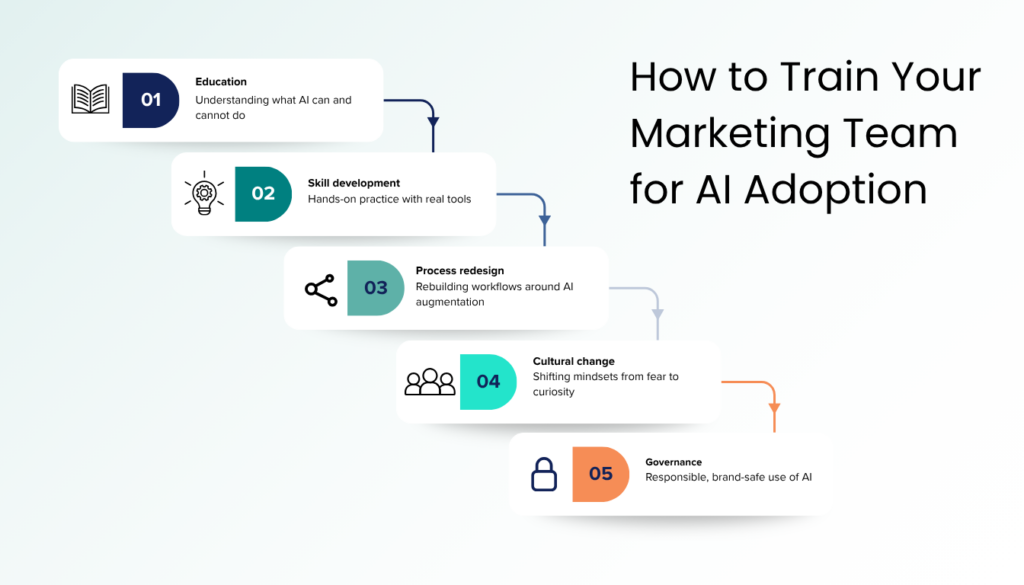
How to Train and Enable Marketing Teams for AI Adoption

Osama Tahir
Fri Mar 20, 2026